I’m a Witch and a magician. Can I be both? If so what do I call myself?
Witchcraft and Magick seem like different paths
Here’s the problem. In the twentieth century Witchcraft and the Western Magical Tradition seemed largely unrelated. Witchcraft was presented as the revival of European Folk Religion, combining the remaining folkloric remnants of the Pagan past with informed reconstruction. It came from the countryside, the hedge Witches and cunning folk, the old families rooted to the land. The Western Magical Tradition on the other hand was an urban magick created by famous men serving in the courts of nobility. These systems were also gendered – Witches were mostly women while men were magicians.
This is certainly what I thought as a beginner. I spent the first decade of my magical life as a Witch. When I picked up the study of Golden Dawn magick it seemed like I was moving into a different world. As a Witch I danced under the moon, celebrated the seasons, called on Goddess and cast spells. As a Golden Dawn magician I worked in a temple, intoned Hebrew names of God, studied the spiritual ladder of Qabbalah and learned esoteric history. They spoke to different sides of my nature, one side grounded and informal, the other structured and exalted.
Ceremonial Magick is more than one thing
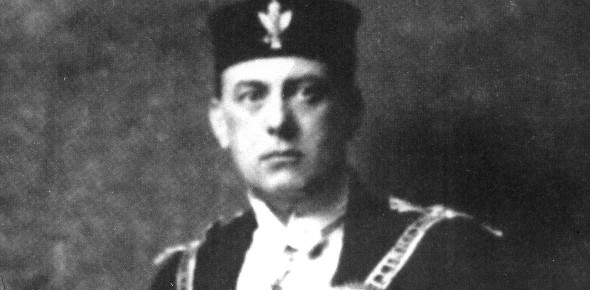
Moving into Ordo Templi Orientis was another world again. The Golden Dawn and O.T.O. get lumped together as “Ceremonial Magick” so it took a while for me to understand how different they are. The O.T.O. focuses on Aleister Crowley’s work. He was a Golden Dawn magician and you can see that foundation in his rituals, but his own versions always put his own spin on them. For example the Golden Dawn’s Lesser Banishing Ritual uses names of God at the four quarters while Crowley’s Star Ruby uses the names of entities he contacted in his youth.
Crowley was also a Freemason. As a woman that world is mostly closed to me so I didn’t clue into how Freemasonic the O.T.O. was until I started decoding some of the jokes the men around me were making. It turns out that the O.T.O. initiation ceremonies are direct copies of the Freemasonic degrees with a few Crowley twists. The main difference is that the O.T.O. has initiated women since Theodor Reuss founded the order. I’ve come to understand my time in the O.T.O. as a way to experience Freemasonry as a woman.
The Gnostic Mass is Witchcraft source material
It was when I got involved with the Gnostic Mass that the links with Witchcraft became clear. Theodor Reuss didn’t just found the O.T.O., he was also the head of an esoteric Christian church, Ecclesia Gnostica Catholica. Crowley brought his own spin to that too. E.G.C. converted to Crowley’s religious philosophy Thelema. Then Crowley created a ritual for the church based on the Christian mass, complete with its own creed and its own consecration of communion. He called it Liber XV, the Gnostic Mass.
The first time I sat in the congregation and witnessed the full mass I said “Well that explains a lot!” I think every Witch ought to attend a Gnostic Mass at least once. It’s not hard, the O.T.O. has branches all over the world and most hold masses that are open to the public. When you experience the ritual it’s immediately clear that Gerald Gardner’s knife-into-cup blessing of wine and cakes and the priest’s words and gestures of drawing down the moon on the priestess are directly ported over from the mass. Contemporary historians of Witchcraft point this out, notably Sorita D’Este and David Rankine in Wicca Magical Beginnings and Jason Mankey in Transformative Witchcraft.
So how did Gardner become familiar with the Gnostic Mass? It’s an interesting story. Gardner met Crowley shortly after the end of the second World War. The O.T.O. had been shattered by the war and Crowley was in search of anyone who could help the organization survive. Crowley gave Gardner initiations by reading through the scripts with him. He also gave him a charter for an O.T.O. group. When Crowley died Gardner announced himself as the head of the O.T.O. in Europe but turned the task over to others who stepped up to continue that work.
In the end Gardner decided to devote himself to Witchcraft instead of the O.T.O., but he was familiar with Crowley’s work. This by the way gives rise to the longstanding rumor that Crowley wrote the rituals of Witchcraft himself. That’s not the case, Gardner and friends wrote them, but they did crib from Crowley’s work.
Gerald Gardner and Doreen Valiente were esotericists
One thing that strikes me about this story is that Gardner was 63 when he met Crowley. He was already 55 when he was initiated by the New Forest coven, in his 60s when he founded his own coven, 70 when he published Witchcraft Today. He wasn’t a young person exploring a new magical path, he was an accomplished and knowledgeable elder doing his major work.
Gardner wasn’t a hedge Witch or a cunning man. He was an esotericist. He’d been a Spiritualist in his youth, then a member of the Rosicrucian society. His first novel High Magic’s Aid incorporates material from the Keys of Solomon. In the same time period he met Crowley and founded the Bricket Wood Coven he also joined the Christian monotheist Ancient British Church, the Ancient Order of Druids, the Society for Psychical Research and the Folk-Lore Society. He was a joiner!
Doreen Valiente was an esotericist too. She studied Spiritualism and Theosophy. She learned the Hebrew alphabet, investigated Golden Dawn materials, and read Aleister Crowley’s books. She was also attracted to the idea of a surviving pre-Christian religion as Margaret Murray and others had presented it. When she learned that Gardner was representing himself publicly as a Witch she tracked him down. In short order Gardner initiated her, apparently by reading to her from his Book of Shadows, as he had been read into the O.T.O. by Crowley.
If Gerald Gardner is the father of Witchcraft, Doreen Valiente is the mother. She re-wrote the Book of Shadows, notably the beautiful and foundational Charge of the Goddess. Because she was so well educated she was also able to call Gardner out. In his biography Philip Heselton tells us that Gardner handed Valiente the Book of Shadows as an ancient text that had been passed down through generations. She promptly sourced most of the material to Co-Masonry, Margaret Murray, the Key of Solomon, and Crowley’s rituals. When she confronted Gardner with this he said the material he inherited was so fragmentary that he had to turn to other sources to make workable rituals.
Witchcraft makes magick accessible
I’ve now reached the age that Gardner was at when he compiled this material. I’ve also accumulated the experience in ceremonial magick to understand the sources. It seems to me that what Gardner told Doreen is the literal truth. He did inherit something that formed the core of Witchcraft, and he did use the Key of Solomon and Crowley’s rituals to shape that into the modern form we practice today.
This is not an indictment, it’s an accolade. What Gardner did was a tremendous accomplishment. He sparked interest in European folk religion and helped kick off the Neopagan movements. He also created a magical system that is vastly more accessible and approachable than anything that came before it.
Magicians invest years of effort in learning arcane languages and symbol systems. It takes forever to furnish an Edwardian era ceremonial temple, it needs its own room and massive pieces of equipment. I’ve spent a good bit of my ceremonial life carting furniture back and forth from storage lockers to rented halls. Once it’s set up the rituals conducted there can go on for hours. Gardner’s circle can be cast in a living room in a few minutes. You can get right to the ritual and it can move quickly. The Gnostic Mass takes an hour to consecrate the wine and cakes of light, the Gardnerian blessing takes a minute.
The ceremonial systems are largely fixed. You can learn Golden Dawn magick from the comprehensive works of Chic and Sandra Tabitha Cicero. Lon Milo DuQuette and David Shoemaker do an excellent job of translating Aleister Crowley’s impenetrable language into a learnable system. These folk make it possible for us to jump in and practice these systems today. They’re an indispensable part of a complete magical education.
That said, these systems can seem rigid. Few people create new rituals or contribute new ideas to them. Witchcraft on the other hand is still evolving. Gerald Gardner’s first draft of the circle is a lot closer to the Key of Solomon than the version Lady Sheba published. Janet and Stewart Farrar picked up the ritual outlines and filled them out with complete scripts and expanded explanations. Then Witchcraft just exploded around the world, developing into dozens of initiatory lineages and hundreds of forms.
Witchcraft is blossoming
Today Witchcraft is crowdsourced. The Book of Shadows isn’t a Bible to be memorized, it’s a jumping off point. Search on “calling the quarters” and you’ll find a gratifying variety of perspectives and invocations. We all make our own, sometimes on the fly. “Who wants to call the quarters?”
A few years ago I had the chance to interview Jason Mankey and asked him for his definition of Witchcraft. He said something like “Witchcraft is the flowering of the Western Magical Tradition”. That struck me as both accurate and poetic. Witchcraft isn’t different from the magical tradition, it’s firmly situated in it. Witchcraft incorporates the systems that came before it and takes them to the next step.
I asked the same question of Gardnerian priest Don Frew. He responded that the fine distinctions we used to make matter less these days. Everyone who practices magick is called a Witch. That was a light bulb moment for me. Once he pointed it out I saw evidence everywhere. I picked up a magazine on Witchcraft at the grocery store that identified Aleister Crowley as a famous Witch! I had to laugh.
That definition shift captures my journey. I started as a Witch, came up in the lodge system as a Golden Dawn magician and O.T.O. initiate, and now decades later I’ve come back around to the beginning. The word that describes the magick I do is Witch.